How Strong Should You Be? Strength Standards for Every Stage of Lifting
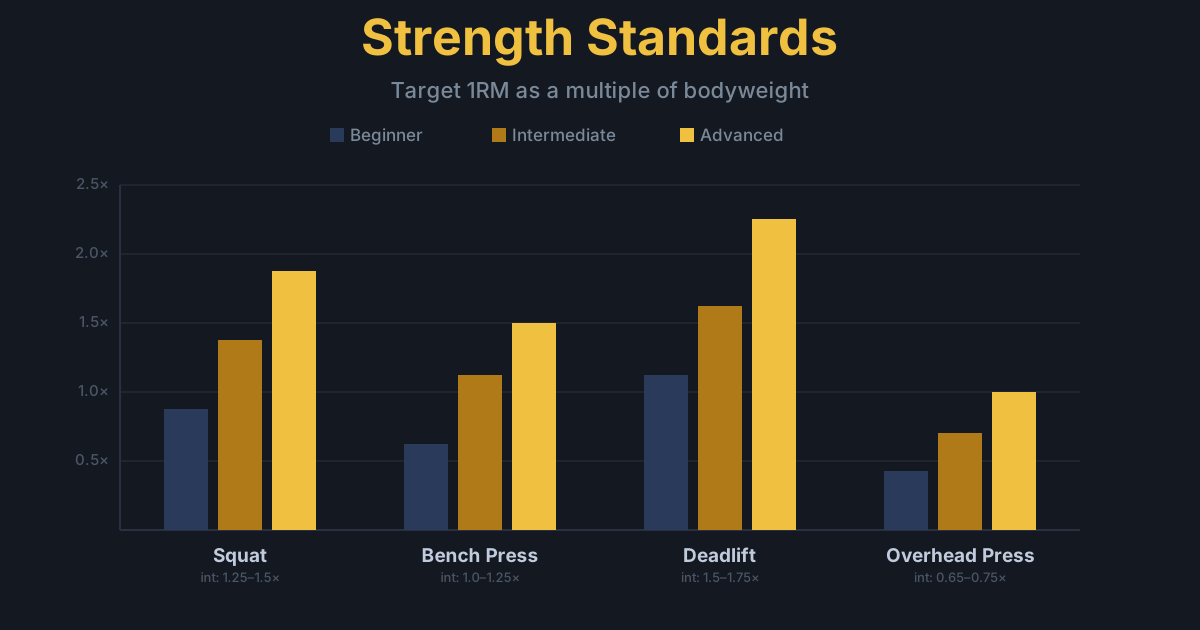
Wondering if your lifts are on track? Here are realistic strength standards for squat, bench press, deadlift, and overhead press at beginner, intermediate, and advanced level.
Blog
Training science, workout planning tips, and updates from the MuscleMind team.
Wondering if your lifts are on track? Here are realistic strength standards for squat, bench press, deadlift, and overhead press at beginner, intermediate, and advanced level.

Beginners don't fail because they picked the wrong program. They fail because no app tells them what to do when something goes wrong. The best beginner workout app removes every decision that requires training experience.
Building muscle is a volume problem, not just a weight problem. Most apps track your heaviest lifts and call it done. The best muscle-building apps manage total weekly volume intelligently — and adapt it every week.
Most apps marketed to women steer them toward cardio and light circuits. The best AI workout app for women is the one that treats strength training seriously — and adapts to your actual performance every week.
Strength training is the one fitness goal where AI app claims are easiest to verify: are your lifts going up? Here's which apps actually deliver — and which ones are just automation theater.

The best progressive overload app for strength training doesn't just log your lifts — it uses them to build next week's plan. Here's an honest comparison of the top options.

The best progressive overload training app works for any fitness goal — not just strength. Here's what genuine automatic progression looks like and who should let an app handle their programming.

Research doesn't study apps — it studies mechanisms. The question isn't whether AI fitness apps work. It's whether your app implements the mechanisms that science shows actually drive results.

Yes — progressive overload is the most well-supported principle in strength training. Here's what the science says and why most people still fail to apply it for muscle growth.
Three genuinely different apps that all call themselves AI. MuscleMind rebuilds your full weekly plan every week. Fitbod manages exercise variety and recovery. FitnessAI predicts your optimal weights. Here's which one matches how you actually want to train.

The 3-3-3 rule gives you a simple structure: 3 workouts a week, 3 exercises per muscle group, 3 sets each. It's a solid starting point — but it leaves the most important question unanswered.

Every workout you complete in MuscleMind earns you $MUSCLE points you can redeem for real discounts. Here's how it works and why no other fitness app does this.
Fitbod, Hevy, MuscleMind, and the rest — compared honestly. One key question separates the good from the great: does the app actually adapt to what you lifted last week?

Most workout apps give you a plan once and forget about you. MuscleMind rebuilds your entire weekly plan based on what you actually lifted. Here's exactly how it works.
Progressive overload is the single most important principle in strength training. Most workout apps claim to do it automatically — almost none actually do. Here's what it really means and how to apply it.
You've been using a workout app for months but your strength hasn't changed. You're not alone — and it's probably not your fault. Here's the real reason fitness apps fail people, and what actually works.